Add a header to begin generating the table of contents
Live music is big business and it’s one of the key ways that fans discover up and coming singers and bands. But if you’re not equipped with an Ed Sheeran-level touring budget to hit the stadiums, then recording a live session can be a great way to show people what you’re made of.
Here’s our step-by-step guide on how to record a live session, covering all things audio and visual – as well as some of the challenges you might come acrossif you’re new to videoing your music. We’ll be covering:
Why record live sessions?
Videoing a band
Location
Prepping the space
Lighting
Video quality
How to record live music
Mics, mixers and digital recorders
What are the challenges?
Editing (mixing and mastering, video editing)
How to promote your video
Why Record Live Sessions?
If you’re an artist or a band, then even something as simple as recording one of your practice sessions has plenty of benefits. It gives you instant feedback on your performance and where you can improve. If someone improvises a brilliant solo or riff, or just comes up with an idea you can expand on later, then you’ve captured it. Plus, it’s all potential content to connect with fans and get their feedback through social media.
You can film a live studio recording as a demo or use it to try out a different direction for a particular track – with moody, stripped-back lighting for something that’s usually more high-impact, for example, or to try out an acoustic set if that’s not your usual vibe.
Videoing a Band
For a filmmaker, shooting a band playing live can give you a great insight into learning how they play and flow together, and how to capture the band’s dynamics.
If you’re starting out as a filmmaker, or a video creator, then it’s great to practise with these kinds of sessions. You don’t need a huge budget, with a mass of sets, effects or costumes dictated by an ambitious concept. You can film with something as simple as an iPhone, or experiment with a three-camera set up, making it easier to vary your shots.
Location
Recording spaces can range from your living room to a practice hall or studio, or a set at a venue.
If you’re in a studio or quite a ‘blank’ space, though, you may have to work out some ways to give your location a bit of personality or atmosphere and mood, through lighting and camera placements.
Prepping the Space
Ideally, go into the space where you’ll be shooting to do some planning with your cameras and pre-lighting, the day before the shoot. If you can get stand-ins, then all the better! This means you can experiment, for example with top-down lighting to spotlight a singer.
If you don’t own a huge variety of lights, remember, you can always hire a few key ones.
Discuss with the band beforehand what kind of feel they want from the video and how it matches their track. Work out which of the band’s members you’re primarily focusing on, and what part the others are playing. How much attention do you need to give each one? This will help you to nail down the lighting and a shot list, which will make editing the final video easier.
This video has great tips on lighting live music set-ups if you’re on a budget, including utilising natural light, if you have it.
Video Quality
To give yourself plenty of choice when you’re editing the video, get a variety of shots. If time permits, then aim to get a variety of single, long takes of each band member, even if they’re not playing or singing throughout the whole take; this will give you more options when it comes to the edit. Start by shooting your priority band member, to make sure you have all your key shots covered, from wides to close ups, and then work down the list.
Harv Video has tips on using three cameras to film a band in a studio, which is a fairly standard filming set up, and enables you to capture specialist shots like drum fills or guitar solos easily:
He also covers colour and contrast grading and shot-matching during the editing process. If you have a multi-camera setup, compare your white balance, ISO, shutter speed, picture profile, etc. Try to get a uniform-looking footage with all the cameras, as this will make the post-production procedure much easier.
Low-To-No-Budget?
No budget for professional cameras? You can film on an iPhone – you’ll get the best result if you can set up multiple ones – and mount some of them on tripods for static shots.
If you’re filming a gig at a venue, then check out these five essential tips – complete with a full list of recommended cameras, lenses, etc:
How to Record Live Music
What Will You Need?
First up, make sure you’ve got all the right equipment. From instruments and amps to a laptop with DAW (Digital Audio Workstation) software – for example GarageBand - you’ll also need an interface that can take multiple XLR inputs. Plus enough XLR cables. Make life easier by labelling them with each source, so the signal paths don’t get confused. And, of course, don’t forget the mics.
Mics
When it comes to recording live music, a must-have is dynamic mics for the amps, plus condenser and dynamic mics for the drums.
Musician’s Friend has a great how-to on how to mike up a standard 4-piece band, comprising vocals, guitars, bass and drums:
You can also ask in a music shop to see what mics they recommend.
Using multiple mics to record the instruments means you’ll have to navigate ‘spill’ or ‘bleed’ between them. This is when one mic’s instrument is picking up the sound of another’s – particularly from drums. A hack to minimise bleed is to position your band members in a semi-circle, so they’re spaced out, but close enough to communicate. For vocals, you might want to record them in a separate session, or a stand-alone take.
Mic everything as closely as possible – and MacProVideo.com advises utilising direct outs/direct boxes whenever possible. ‘The more direct and isolated you can capture a sound, the more you can manipulate that sound in the mix.’
Audio Interface
This is a conduit that allows you to capture the direct signal from your soundboard into your recording device. This then connects to your computer, or even an iPad.
Mixers & Multi-Track Recorders
Bands need a mixer, so why not have one that’s also a recorder? Look at TouchMix or Tascam for a variety of models.
Portable Digital Recorders
Alternatively, if you’re on a budget, you can record your instruments on a portable digital recorder, such as the Zoom or Tascam, into which you can plug mic inputs.
You can then import your tracks into the DAW in order to mix them. Plus, you can use a recorder such as the Zoom if you’re recording audio at a live gig with a crowd. This enables you to mix the live music and bring in some crowd noise, for atmosphere, without the latter drowning out the former.
Mix Engineers
If you’re working with live audio, then it’s great if you can get a mix engineer – also known as audio engineers – on board as part of your crew. Again, if you can get access to your location ahead of time, then the mix engineer can check out how the sound carries within the space.
What Are the Challenges of Recording a Live Session?
There can be all sorts of issues that come up when you’re recording and filming live sessions. Here are some things to watch out for (sometimes literally!)
If you’re filming in a studio, or a small space, then there may be a lot of equipment and cables around. You need to plan your shots and your movements if you’re using a hand-held camera, to ensure that you don’t trip over, bang into or knock anything over. Some of this equipment can be worth thousands of pounds!
If you’re doing multiple takes, because you only have one camera, then you can get your sound engineer to record the audio during the shooting from one angle. The group or band can then play over their recording for the other angles. Ideally, you always want to film the whole session live, to stay truer to the process of a live recording. But when this isn’t possible, this is one way to maximise angle changes, when you only have one camera.
If you’re filming a live gig in a venue, then there may be someone there to help you to operate the lights, who can play around with gels, colours, etc. to bring more atmosphere and add depth and interest, even on a small stage.
Jacques Gaines has useful advice on the challenges of shooting at live music events, including using cameras with automatic focusing, so that you can ‘set and forget’
He also advises negotiating your access with the venue beforehand and asking plenty of questions. Can you go backstage? Are you able to shoot from behind the drummer? What about where the sound and monitor operators are? How close to the front of the stage can you get?
Editing
If you’re using software such as Final Cut Pro, then a good tip is to label your files with unique names when you’re filming. If you didn’t do this at the time, then put them in clearly labeled folders that are easy to organise when you import them.
Then edit the audio files, mixing and editing them to get it sounding great. One of our most successful composers, Terry Devine-King, has great advice on mixing and mastering. Import the audio and then you’re ready to bring the two elements together!
So you’ve recorded, mastered and edited your audio and your video. Now, how do you go about promoting it?
Well, YouTube is still the go-to channel, with more than two billion users worldwide, and millions of videos. You can use YouTube ads to increase your visibility – you just need a Google Adwords account. Then choose the format of the ad and its location (in a video, via search, etc.) Create a target audience and set a budget that will be linked to the cost per click, or the cost per view.
Build a community around your band by offering additional content on your YouTube channel, from behind-the-scenes clips from your live sessions and more, to vlogs on your musical influences.
When it comes to YouTube searches, the title of your video is crucial and don’t forget to write a description and add relevant, accurate tags.
Already got a fanbase? Post up some teaser clips and let them know when your video is dropping. Plus, share your video on your personal pages, your artist page and on platforms including TikTok, Instagram, Facebook, Twitter and more, depending on your audience. Make sure you optimise the video for each platform individually, as some of them have different preferred video formats.
Check out what magazines and blogs like to post about new music and reach out to see if they’d like to post yours. Ditto for music influencers. You can also target communities that love your genre – but make sure to participate in these forums and become a part of the community before you promote your video.
Patternsis an emotive set blending solo piano with lyrical pieces embellished by orchestral strings. Moods range from romantic and wistful to mysterious and dramatic - take a listen below and prepare to fall in love.
Need Music for Your Project?
At Audio Network we create original music, of the highest quality, for broadcasters, brands, creators, agencies and music fans everywhere. Through clear and simple licensing, we can offer you a huge variety of the best quality music across every conceivable mood and genre. Find out how we can connect you with the perfect collaborator today by clicking the button below!
Add a header to begin generating the table of contents
When we think of bluegrass music, we think of the kind of rural, acoustic music capable of instantly wiping away all your troubles.
Often considered a close relative of country music, the genre is built upon soul-stirring sounds and thoughtful lyrics that, together, transport you to pastoral villages located within the Appalachian Mountain region of North America. But what exactly is bluegrass music?
We’ve got everything you need know about this hugely popular genre, together with a look at some of the best bluegrass musicians – one of whom is a relatively new contributor to our ever-expanding collection.
Contents
What is bluegrass music?
Where did bluegrass originate?
Who came first in the history of bluegrass music?
What are the main characteristics of bluegrass music?
The best bluegrass musicians
Bill Monroe
Alison Krauss and Union Station
Nickel Creek
John Hartford
Earl Scruggs
Yonder Mountain String Band
Trampled By Turtles
Foggy Mountain Boys
Eric Weissberg
Eddie Island
Our music catalogue
What is Bluegrass Music?
Bluegrass music has a cocktail of influences – an American country and old-time mountain foundation is shaken and stirred with a measure of British folk, a generous helping of blues, a shot of gospel and a dash of jazz.
The result is a sound that cools the nerves, warms the heart and fires up one’s desire to become one with the moment.
Where Did Bluegrass Originate?
Bluegrass originated in the United States’ Appalachian region.
Initially, the genre was a combination of the sounds brought to America by British settlers and the West African enslaved peoples; thus, it was the European fiddle and the African banjo that originally defined the sound. Later, the guitar, mandolin and bass became vital to the style of music as it grew in popularity.
During the late 1930s, singer, songwriter and mandolin player Bill Monroe officially introduced the genre in a complete and commercial form. The musician formed the Blue Grass Boys – named after the turf that grows across his home of Kentucky – and once they shared their music, people worldwide fell in love with bluegrass.
Who Came First in the History of Bluegrass Music?
There’s no denying that Bill Monroe and the Blue Grass Boys were absolutely pivotal to the genesis of bluegrass music, as the genre is quite literally named after the collective.
It’s said that the official debut of the fully-formed genre was in 1939 when the band appeared on the Grand Ole Opry to play their bluegrass tracks to the station’s multitudinous listeners.
What Are the Main Characteristics of Bluegrass Music?
Different audiophiles have different perspectives on what defines bluegrass music, but there are certain elements that everyone can agree characterise bluegrass. These also set the bluegrass genre apart from the more familiar country genre.
1. Bluegrass bands solely rely on acoustic instruments, eschewing electric instruments to maintain a pure and wholesome sound.
2. Bluegrass songs usually contain multi-part vocal harmonies featuring several voices stacked together.
3. Bluegrass music is usually a lot faster and more upbeat than country music.
4. Bluegrass music has a folk sensibility that keeps the sounds of traditional British music alive.
Want to learn a little more about the origins of bluegrass music? Watch this video produced by Hand Productions.
The 10 Best Bluegrass Musicians
Bill Monroe
Not only is Bill Monroe (1911-1996) the founding father of bluegrass, but he’s also recognised as one of the greatest bluegrass musicians to ever exist.
The singer, songwriter and mandolin player combined breakneck tempos, stacked harmonies and acoustic string solos to create a sound that was unlike anything else on the music scene at the time.
Alison Krauss & Union Station
Alison Krauss and Union Station were established in 1987 when Krauss was supported by a bluegrass band composed of Jeff White, Mike Harman and John Pennell.
Although its members have changed over the years, the band is still going strong – ensuring modern-day audiences still have access to traditional yet contemporary bluegrass music.
Nickel Creek
Often dubbed a ‘progressive bluegrass band’, Nickel Creek has always been good at imagining what the future of the music genre looks and sounds like.
The Southern Californian band is currently made up of three members – Sara Watkins on the fiddle, Sean Watkins on the guitar and Chris Thile on the mandolin – and, as of 2014, has been signed to Nonesuch Records.
John Hartford
John Hartford (1937-2001) was an all-rounder in terms of his bluegrass abilities. The New York City-born musician was a master on the fiddle and the banjo and also had an idiosyncratic voice that perfectly lent itself to the genre.
His most memorable song was undoubtedly ‘Gentle on My Mind’ – a track that led to the singer picking up two accolades at the 10th Annual Grammy Awards.
Earl Scruggs
Earl Scruggs (1924-2012) – the man famed for popularising the three-finger banjo-picking style – was just 21 when he was hired to join Bill Monroe’s Blue Grass Boys.
Just a few years later, Scruggs resigned from the band alongside Lester Flatt, and together they established their own group called Flatt and Scruggs and the Foggy Mountain Boys.
Yonder Mountain String Band
Yonder Mountain String Band is a bluegrass group from Nederland, Colorado that has been active ever since 1998.
Thus far, they have released five studio albums and have even established their own independent record label called Frog Pad Records.
Trampled By Turtles
In fewer than two decades, Duluth-based band Trampled By Turtles have released nine albums, three of which have reached the top spot on the US Billboard bluegrass chart, and played at many of the world’s major festivals, including Coachella, Stagecoach and Bonnaroo festival.
Punch Brothers
Chris Thile, Gabe Witcher, Noam Pikelny, Chris Eldridge and Paul Kowert make up the Punch Brothers – the bluegrass band signed to Nonsuch Records and was awarded the Grammy Award for the Best Folk Album in 2018.
Formed in 2006 in NYC, it’s fascinating to see how the Punch Brothers permeate their bluegrass sounds with urban influences.
Eric Weissberg
Singer and multi-instrumentalist Eric Weissberg is celebrated as both a solo artist and as part of the American bluegrass group The Tarriers.
One of the most significant moments in Weissberg’s career is when his banjo solo ‘Dueling Banjos’ was used as the theme of John Boorman’s 1972 thriller Deliverance.
Eddie Island
From American Idol to the Audio Network catalogue, Eddie Island has had a whirlwind couple of years.
The bluegrass vocalist and guitarist was born and raised in Fairfax, Virginia and, after high school, relocated to Nashville, Tennessee to pursue a career in music.
Our Music Catalogue
Of course, our catalogue covers a lot more than just bluegrass music. At Audio Network, you can discoveralbums and playlists of every kind of genre, for every kind of production (including film and television productions, no matter how big or small the budget may be).
And if you want to learn more about other types of music before you commit to purchasing and licensing one of our tracks, check out The Edit. Split into inspiration, expertise and news the content explores how the industry uses music in everything from ads to films, TV and documentaries.
Need Music for Your Project?
At Audio Network we create original music, of the highest quality, for broadcasters, brands, creators, agencies and music fans everywhere. Through clear and simple licensing, we can offer you a huge variety of the best quality music across every conceivable mood and genre. Find out how we can connect you with the perfect collaborator today by clicking the button below!
Add a header to begin generating the table of contents
Nature provides a constant world of wonders, awesome spectacle and species adapting to often challenging environments. But which are the top nature documentaries, and why? We take a look at the best work by the BBC’s legendary Natural History Unit, fascinating campaigning films tackling the climate emergency – and humans’ part in it – and even documentaries that bring extinct animals back to life.
Plus, as the official sponsor of the Wildscreen Festival, we’ve also highlighted scores and soundtracks, ranging from Philip Glass to Hans Zimmer. The latter revealed the power of music in the best nature documentaries when he spoke to National Geographic recently:
‘There is an inherent mystery and element of extraordinary chance in the world of nature. The music mercilessly seduces you into paying attention to what is going on onscreen… We make everything look beautiful, absolutely wonderful, and for a moment you love it all. When really, we should be saying, wake up – we’re destroying it all. And when we destroy it, we will destroy ourselves.’
Here are the nature docs we’ll be diving into:
Life on Earth
Planet Earth II
An Inconvenient Truth
The Blue Planet
The Frozen Planet
Walking with Dinosaurs
Racing Extinction
Kiss the Ground
Blackfish
The Cove
Wild China
Wild Caribbean
Earthshot: Repairing our Planet
Attenborough’s Life in Colour
March of the Penguins
Chris Packham’s Animal Einsteins
Natural History Museum: World of Wonder
A Perfect Planet
Cheetah Family and Me
Koyaanisqatsi
Forest of the Golden Monkey – China’s Hidden Kingdoms
Jane
Our Planet
Cowspiracy
My Octopus Teacher
Seaspiracy
The Best Nature Documentaries
Life on Earth (1979)
The OG of nature documentaries was made by the BBC in 1979, and featured David Attenborough travelling the globe, tracing the story of the evolution of life on our planet. This was the show that really established David Attenborough as not only TV’s foremost naturalist, but also an icon of British culture.
From building replicas of mole rat burrows to spending hundreds of hours waiting for a Darwin’s frog, which incubates its young in its mouth, to finally spit them out, the show pioneered a number of filming techniques to capture often rare, elusive animals.
The series’ most iconic sequence was when Attenborough interacted with a group of mountain gorillas in Dian Fossey’s sanctuary in Rwanda. He described the encounter in his memoirs as, ‘one of the most exciting encounters of my life.’
The series’ soundtrack was just as innovative. Composer Edward Williams’ avant-garde score was recorded with a traditional chamber music ensemble, combined with electronic sounds, processed through an early British synthesizer, the EMS VCS 3.
Planet Earth II (2017)
For natural history filmmaking at its most riveting, look no further than Planet Earth II’s most celebrated sequence. Baby iguanas have to run the gauntlet across a sandy beach to the safety of the rocks, whilst chased by a cascade of beady-eyed, super-fast racer snakes.
The desperate chase sequence is so gripping that it’s been watched over 26 million times on YouTube (and it won Virgin TV’s ‘Must See Moment’ awards at the BAFTAs). The final iguana’s near-miraculous escape is soundtracked by blockbuster supremo and Oscar-winner Hans Zimmer, who expertly ramps up the tension.
When it came to writing the music for it, Zimmer said, ‘Imagine you’re a Hollywood composer, and so you know a lot of Hollywood directors who are all doing their car chases and whatever. Nobody ever had as exciting a chase, as exciting footage, as that. It’s incredibly emotional stuff. All the music is trying to do is shine an additional light onto things. Make it something that gets under your skin.’
Zimmer has also scored Seven Worlds, One Planet and Blue Planet II for the BBC. This year saw him combine forces with another BBC favourite, George Fenton, to conduct the Earth Prom, a musical celebration of the iconic moments filmed by the BBC’s Natural History Unit, at the Royal Albert Hall, to celebrate the BBC’s centenary.
An Inconvenient Truth (2006)
Director Davis Guggenheim eloquently weaves the science of global warming with former Vice President Al Gore’s personal history and lifelong commitment to reversing the effects of global climate change in the nature documentary that kick-started a worldwide discussion of climate change.
Gore presents a wide array of facts and information in a thoughtful and compelling way - often humorous, frequently emotional, and always fascinating. In the end, An Inconvenient Truth accomplishes what all great films should: it leaves the viewer shaken, involved and inspired.
Gore and the Intergovernmental Panel on Climate Change (IPCC) was awarded the Nobel Peace Prize for their efforts to obtain and disseminate information about the climate challenge and put it on the political agenda. According to the Nobel Committee at that time, Gore was probably the single individual who had done most to rouse the public and the governments that action had to be taken to meet the climate challenge. ‘He is,’ in the words of the Committee, ‘the great communicator’.
The Blue Planet (2001)
‘Our planet is a blue planet: over 70% of it is covered by the sea. The Pacific Ocean alone covers half the globe. You can fly across it non-stop for twelve hours and still see nothing more than a speck of land. This series will reveal the complete natural history of our ocean planet, from its familiar shores to the mysteries of its deepest seas.’
The natural history of the world’s oceans is captured in this beautifully-filmed documentary. Yet another ground-breaking series from the BBC, state of the art underwater photography techniques were used to capture previously un-filmed species and their behaviour. From tidal to coral, seasonal to frozen, TheBlue Planet revealed the extraordinary wonders and surprises of life underwater.
The series took almost five years to make, covering nearly 200 filming locations. The camera team spent three years on standby, waiting to film blue whales – they finally caught up with them in the Gulf of California. Whilst in South Africa, the team spent two seasons attempting to film the annual sardine run.
George Fenton’s gorgeous score, which won a BAFTA for Best Original Music, kick-started the fashion for live orchestral performances of TV scores – The Blue Planet Live! toured the UK from 2006-2008. The show featured some of the most spectacular sequences, displayed on a huge screen, 18 metres wide and three storeys high.
The Frozen Planet (2011)
With The Frozen Planet, the BBC revealed the last great wildernesses on the planet – the Polar regions. The seven episodes take the viewer across the frozen lands of the Arctic and the Antarctic to observe the climactic conditions and examine the challenges faced by indigenous wildlife.
Despite being so seemingly inhospitable, these vast, frigid landscapes are surprisingly rich with life. The Natural History Unit once again captures unimaginable imagery above and below the ice, using cutting-edge camera technology and crystal-clear high-definition cinematography.
Featuring polar bears, Arctic terns, krill, minke whales and penguins, the series won BAFTAs for Best Sound: Factual, Best Photography: Factual and Best Editing: Factual, together with four Primetime Creative Arts Emmy Awards.
George Fenton once again composed the musical score and songs, conducting the BBC Concert Orchestra.
Walking with Dinosaurs (1999)
If you’re a Jurassic Park fan, then why not watch the ‘real’ thing? Combining fact and informed speculation with computer graphics and animatronics effects that were cutting-edge at the time, the series took two years to make and was a huge hit. It made a distant world as real and natural as images from today’s Serengeti.
The series begins in the late Triassic period and concludes in the late Cretaceous period, as you watch insectivorous pterosaurs chase moths in the evening air, or bull Torosaurus lock horns over a young female. Tracing the 145-million-year history of dinosaurs, from their first appearances to their abrupt demise, this series marked a watershed in TV imagery.
The score was composed by Benjamin Bartlett, who has also written for Vera, Stan Lee’s Lucky Man and He Kills Coppers and took home the BAFTA for Best Original Music.
Racing Extinction (2015)
As you might expect from the title, this is a documentary exploring the devastating effects of climate change on the world’s oceans. Human activity currently threatens half of the world’s aquatic species with mass extinction.
Academy Award-winning documentary director Louie Psihoyos (The Cove) joins scientists, environmentalists, activists, artists and engineers to draw attention to the pressing issue of mankind’s role in mass extinction in this sobering eco-thriller. The filmmakers also offer suggestions as to what each of us can do to protect nature, our oceans and the environment for generations to come.
J. Ralph is an Academy Award-nominated composer, and his score for Racing Extinction also includes the original song ‘One Candle’, recorded with SIA.
Kiss the Ground (2020)
‘The answers we’ve been looking for to fight climate change are right under our feet. Regenerative agriculture is a way to use the planet’s own natural systems to rebalance our climate while meaningfully supporting the farmers and ranchers we all rely on every day’, Filmmakers Josh and Rebecca Tickell
Narrated by Woody Harrelson, Kiss the Ground sheds light on a ‘new, old approach’ to farming called ‘regenerative agriculture’, which has the potential to balance our climate, replenish our water supplies and feed the world.
This covers ideas such as reduced tilling, limits on nitrogen fertilisers, use of cover crops and prioritisation of animal and plant diversity. Based on a book of the same name, and directed by award-winning filmmakers Josh and Rebecca Tickell, the film shows how soil health is tied to our planet’s overall heath.
Blackfish (2013)
Blackfish tells the story of Tilikum, a notoriously aggressive orca that killed three people while in captivity at SeaWorld in Florida. Director Gabriela Cowperthwaite uses shocking footage and emotional interviews to present a convincing case against keeping these wild animals for human entertainment.
The Guardian’s Peter Bradshaw praised Blackfish for being, ‘as horribly gripping as a serial-killer thriller, though the real villain is not the ostensible culprit, but its human captors’. He concluded that, ‘we frown on circus animals and we would be horrified by zoos which featured the keepers riding around on lions’ backs or sitting on the shoulders of gorillas. Yet the whale acts are still acceptable. Not for much longer, perhaps.’
Highly regarded as a jazz instrumentalist, American composer Jeff Beal creates music that often incorporates improvisatory and composed elements. His dramatic soundtrack for Blackfish shows the scope of using a full orchestra to create storytelling tension.
The Cove (2009)
Using state-of-the-art equipment, a group of activists, led by renowned dolphin trainer Ric O’Barry, infiltrate a cove near Taijii, Japan to expose both a shocking instance of animal abuse and a serious threat to human health.
In September every year, over 2,000 small whales and dolphins may be captured or killed in the dolphin drive hunting season. The Cove, directed by Racing Extinction’s Louie Psihoyos, is a provocative mix of investigative journalism and eco-adventure, whose arresting imagery makes this an unforgettable and courageous story, inspiring both outrage and action.
Wild China (2008)
The best animal documentaries show you something unexpected and transformative. Billed as ‘the last hidden world’, this ground-breaking six-part series brought never-before-seen images of Chinese wildlife, landscapes and people into our homes. From the world’s highest mountains to steaming forests, grassy plains and rich tropical seas, the programme took more than two years to complete and includes rare footage of some of China’s most remote regions, including the Mongolian steppes and the Yuanyang rice terraces.
The beautiful score was composed by Barnaby Taylor and performed by Cheng Yu and the UK Chinese Ensemble.
Wild Caribbean (2007)
Along with Wild China, Wild Caribbean was part of the BBC Natural History Unit’s ‘Continents’ programmes, surveying the natural history of each of the world’s major land areas.
The four-part series was narrated by actor Steve Toussaint – now starring as Lord Corlys Velaryon in HBO’s Game of Thrones prequel, House of the Dragon. The series reveals the islands’ hidden wild side, including the mangrove forests of Barbuda’s lagoons, which host the Caribbean’s largest colony of frigate birds, Cuba’s limestone caves and the 20,000 Caribbean flamingos that arrive to breed on the southerly ABC islands’ salt pans.
The original score was by David Lowe who, fun fact, is also the composer of the iconic BBC News theme, which he originally wrote in 1999.
Earthshot: Repairing our Planet (2020)
The Earthshot Prize is awarded to five winners each year for their contributions to environmentalism. The five categories were inspired by the UN Sustainable Development Goals; they are the restoration and protection of nature, air cleanliness, ocean revival, waste-free living, and climate action.
Launched in 2020 by Prince William and David Attenborough, the Prince gave a TED Talk discussing climate change and encouraged world leaders to take action, to mark the launch of the ten-year project. Prince William and Attenborough both appeared in the accompanying BBC documentary, which detailed the importance of environmental work and discussed the new prize.
Attenborough’s Life in Colour (2021)
David Attenborough gets up close and personal with the animal kingdom to bring our colourful world to life through a whole new perspective.
Find out why tigers are orange, zebras have stripes and flamingos are pink – and technology enables viewers to look beyond our limited, human, perception and see things from the creatures’ own unique visual perspectives.
March of the Penguins (2005)
This French feature-length nature documentary, depicting the year-long journey of the Emperor Penguins of Antarctica, was directed and co-written by Luc Jacquet, and co-produced by the National Geographic Society.
The beautiful documentary chronicles the heroic and harrowing journey that the penguins make, amid subfreezing temperatures and violent snowstorms at the South Pole, in order to mate. Biologist and filmmaker Jacquet had to be almost as determined as his subjects – he spent more than a year filming, in the harshest of conditions.
Empire hailed it for, ‘producing some of the most beautiful images of the Antarctic ever committed to celluloid’, whilst Alex Wurman’s sprightly soundtrack is a stand-alone pleasure.
Chris Packham’s Animal Einsteins (2021)
Get inside the minds of nature’s savviest species with Chris Packham, and prepare to be amazed. Cunning corvids, fast-fingered chimps and the buzz words of bees all show how smart animals have to be to survive. Packham and the BBC team uncover an array of clever strategies across the animal kingdom.
Natural History Museum: World of Wonder (2021)
Venture behind the doors of one of the greatest museums in the world, London’s Natural History Museum. Revealing everything from the life story of the 25-metre long skeleton of Hope, the blue whale, to piecing together the skeleton of a T-Rex, you’ll also encounter some of the never-before-displayed items from the museum’s 80 million-strong collection.
A Perfect Planet (2021)
Covering volcanoes, the sun, weather, oceans and the human impact on the environment, this is another ambitious earth science series from the BBC. Over 3,000 hours of footage were captured for the series, which spans 31 countries.
The five-part series shows how the forces of nature, such as ocean currents and solar energy, drive, shape and support Earth’s great diversity of life. In doing so, it reveals how animals are perfectly adapted to whatever their environment throws at them.
The beautiful orchestral soundtrack was created by award-winning composer Ilan Eshkeri (Stardust, The Young Victoria), who said that, ‘creating the music for A Perfect Planet has been a hugely rewarding experience. The series celebrates the extraordinary world we are a part of, as well as showing the delicate balance of the systems that support life, and what we need to do to ensure its future stability.
‘It’s a message that’s very important to me and one that I believe we have a responsibility to engage with – in a way that not only educates but inspires the next generation. This influenced my approach to the music, and set me on an unconventional path… I hope my music can play a small part in helping to inspire change.’
Cheetah Family and Me (2021)
Wildlife cameraman Gordon Buchanan embarks on an adventure to get up close and personal with an animal family, following two cheetah mums as they work against all odds to protect and provide food for their gorgeous young cubs.
Based in the Kalahari, Buchanan experiences at first hand the very real dangers these beautiful big cats face from their harsh environment, dangerous wildlife and dwindling prey, with the help of expert cheetah guides Richard Satekge and Julius Mkhize.
A subtle soundtrack brings both lightness and drama, according to what the two cheetah families are experiencing.
Koyaanisqatsi (1982)
This Hopi word means ‘life out of balance’. Director Godfrey Reggio’s unconventional documentary details the inherent conflict between nature and urbanism. An original score by legendary composer Philip Glass complements the stunning cinematography.
Featuring extensive footage of natural landscapes and elemental forces, the film gives way to many scenes of modern civilisation and technology. Given its lack of narration and dialogue, the production makes its points solely through imagery and music, with many scenes either slowed down or sped up for dramatic effect.
Forest of the Golden Monkey – China’s Hidden Kingdoms (2021)
Meet China’s most affectionate and vocal monkeys in the remote, seasonal forests of Central China. Follow the journey of a baby Golden snub-nosed monkey during the first year of her life as she learns all about her forest home and battles the elements to survive, in National Geographic’s stunning documentary.
Jane (2017)
National Geographic began producing documentaries in 1965, featuring the work of Jane Goodall, Jacques Cousteau and Dian Fossey.
They returned to the work of Jane Goodall in 2017, drawing on over 100 hours of never-before-seen footage tucked away in the National Geographic archives for over 50 years. Award-winning director Brett Morgen (Montage of Heck, The Kid Stays in the Picture) tells the story of the extraordinary woman whose chimpanzee research challenged the male-dominated scientific consensus of her time.
The story of the trailblazer who defied the odds to become one of the world’s most admired conservationists is soundtracked by a rich orchestral score from legendary composer Philip Glass. The Hollywood Reporter had particular praise for Glass’s music and the part it plays in the documentary: ‘Set to an almost overwhelmingly emotional original score by Philip Glass, this is a wondrous and moving account of a remarkable life, that puts us right there with Goodall.’
The Best Nature Documentaries on Netflix
Our Planet (2019)
Netflix’s ambitious first nature documentary enables viewers to experience our planet’s natural beauty and examines how climate change and humans impacts all living creatures.
The series’ spectacular scope was overseen by Alastair Fothergill and Keith Scholey, the producers behind world-famous nature documentaries Planet Earth, Frozen Planet and The Blue Planet.
From frozen worlds to jungles, coastal seas to deserts and grasslands, forests to fresh water, Bryan Resnick of Vox praised the series for its take: ‘Humans have caused staggering amounts of wildlife loss. Our Planet doesn’t hide from it’.
Specially commissioned orchestral music by Stephen Price was accompanied by theme song ‘In This Together’ by Ellie Goulding.
Cowspiracy: The Sustainability Secret (2014)
Billed as, ‘the film that environmental organisations don’t want you to see!’, Cowspiracy was described by director Darren Aronofsky (Black Swan) as, ‘a documentary that will rock and inspire the environmental movement’ and is definitely a conversation-starter.
The film follows intrepid filmmaker Kip Andersen as he uncovers the most destructive industry facing the planet today: animal agriculture. As eye-opening as Blackfish, and as inspiring as An Inconvenient Truth, this is a shocking, yet humorous documentary, which reveals the devastating environmental impact of large-scale factory farming.
My Octopus Teacher (2020)
‘What Charlotte’s Web did in the popular imagination for the humble, much-maligned barn spider, My Octopus Teacher sets out to achieve for the eight-limbed mollusc of its title — a creature of great, shimmery beauty and mystery regarded by many with more bemusement than affection.’ Variety.com
My Octopus Teacher took home the Oscar for the Best Documentary Feature in 2021. Filmmaker Craig Foster forges an unusual friendship with an octopus living in a South African kelp forest, learning as the animal shares the mysteries of her world.
Every day for a year, Foster went free diving, wanting to be ‘more like an amphibious animal’, without barriers between himself and the environment. The spellbinding film, as well as revealing the hidden depths of octopus’ behaviour and intelligence, also showcased the world of the kelp forests, which make up roughly 25% of global coastlines.
The soundtrack is by Kevin Smuts, who took home the award for best score at the International Documentary Awards.
Seaspiracy (2021)
Passionate about ocean life, British filmmaker Ali Tabrizi sets out to document the harm that humans do to marine species — and uncovers alarming global corruption. Seaspiracy examines the global fishing industry and shows how human actions cause widespread environmental destruction.
Fishing has wiped out 90% of the world’s large fish and is the greatest threat to marine wildlife. An astonishing 30,000 sharks are killed every hour, whilst 70% of macro plastic at sea comes from fishing gear. Plus, there’s a human cost, with 24,000 fisheries workers dying on the job every year and widespread forced labour reported in 47 countries.
It’s another bold, eye-opening documentary from Netflix that changed many people’s ideas on the ‘sustainability’ of fishing.
Wildscreen Festival 2022
As you can see, whether you want to be awed by its power, or inspired to make changes in order to conserve wildlife and ecosystems, there’s a nature documentary for you. Nature docs are one of our favourite genres – so much so that we’re very proud to be the official Music Partner of Wildscreen Festival 2022. Wildscreen celebrates the very best in natural world storytelling, and is taking place from October 10th-14th.
Looking for inspiration for your nature documentary score? We have a wealth of fantastic tracks for you to license, including:
‘Beautiful Life’ by Patrick Hawes combines joyful piano with busy, nostalgic strings, ideal for a positive, slightly quirky sequence.
Kes Loy’s ‘As I Go Higher’ is a thoughtful picked acoustic guitar track, perfect for a section full of warmth and optimism.
If you’re looking for ‘Active Optimism’, then choose Mark Petrie’s track, with uplifting, warm synths, strings and a melodic piano build. It’s also got a triumphant ending, making it great for a ‘journey’-type section.
If there’s another Walking with Dinosaurs doc, then may we suggest including ‘March of the Mammoth’? Emotional strings blend with battle drums and a haunting vocal chant.
‘Peek a Boo’ is giving us cheeky monkey vibes, or inquisitive young animals exploring and getting into trouble with its jaunty, mischievous pizzicato strings, xylophone and clarinet.
For dreamy aerial, or underwater shots, Luke Richards’ aptly-titled ‘Electricity in the Air’ features hypnotic, floaty piano arpeggios, with light pulsing synths and atmospheric textures.
Any Aussie nature doc can take Alies Sluiter’s ‘Edible Emus’ as its musical starting point. Full of didgeridoo and pizzicato strings, it’s also got animal noise effects to fully seal the deal.
If you’ve got a quieter interlude to score, then why not give Matt Nasir’s ‘Not a Care in the World’ a listen? Its serene piano and strings are laid over a light female vocal bed.
Or for something a bit darker, try ‘Heart of the Storm’ – its slow, moody soundscape features a drone and clarinet, which remind us of deep space, or alien-looking life forms miles down in the ocean.
If you loved Frozen Planet, then ‘Arctic Blue’ will transport you back to the icy landscapes, courtesy of its wistful piano and harp.
At Audio Network we create original music, of the highest quality, for broadcasters, brands, creators, agencies and music fans everywhere. Through clear and simple licensing, we can offer you a huge variety of the best quality music across every conceivable mood and genre. Find out how we can connect you with the perfect collaborator today by clicking the button below!
Add a header to begin generating the table of contents
The Wizarding World of Harry Potter has been thrilling kids and grown-ups alike since the first book, Harry Potter and the Philosopher’s Stone, was published in 1997. Following on from the blockbuster movies, fans can now explore their iconic sets and discover the magic behind bringing the Harry Potter films to life on the Warner Bros. Studio Tour in Leavesden and go on Harry Potter-themed rides at Universal Studios. Plus, of course, there’s enough merch for generations to come.
We’re going to dive into the best Harry Potter commercial campaigns, for the full lowdown on Harry Potter marketing.
Warner Bros. Studio Tour London – The Making of Harry Potter
Step onto the authentic sets, discover the sleight-of-hand behind spellbinding special effects and explore the behind-the-scenes secrets of the Harry Potter films with the Studios Tour. You’ll enter the iconic Hogwarts Great Hall and explore the Forbidden Forest, all before boarding the original Hogwarts Express at Platform 9 ¾ and wandering down Diagon Alley.
Located at the Studios where all eight films were produced, the Studio Tour showcases the British talent, imagination and artistry that went into making the impossible a reality on screen – and now, you can even see round Gringott’s Wizarding Bank.
This longer ad gives you a better idea of all the wonders you’ll see – including drinking butter beer, visiting Privet Drive and getting to climb aboard various forms of Potter-based transportation, with plenty of fan photos and the fuller, choral version of the theme, which also has plenty of stirring brass.
Harry Potter Max Original Series – Official Announcement
When it comes to Harry Potter promotional videos, you’d be hard-pressed to find one that’ll generate more excitement than this one. Yes, Harry Potter is finally coming to TV. Warner Bros. Discovery has officially announced its plan for a decade-long TV series that will be a ‘faithful adaptation’ of JK Rowling’s Potter books. The show will serve as an original series for Max – the new streaming service combining HBO Max and Discovery+.
The series – due to be released over the course of 10 years – will be exec produced by Rowling, Neil Blair and Ruth Kenley-Letts; David Heyman, the exec producer of the films, is also in talks to join. The show will feature an all-new cast, guaranteeing that the series will reach an entirely new generation of fans.
You’ll probably have to wait till 2025 to see the premiere, so in the meantime, here’s the announcement trailer, featuring both the iconic floating candles from the dining hall and – will they dare to change it in the future? – that theme…
Harry Potter and the Cursed Child
Based on an original story written by JK Rowling, John Tiffany and Jack Thorne, set nineteen years after the events of Harry Potter and the Deathly Hallows, this play has been lighting up the West End with magic, illusions and stage wizardry ever since its premiere in June 2016. Not to mention receiving a record-breaking eleven nominations and winning nine awards at the 2017 Laurence Olivier Awards. It’s since opened at theatres worldwide.
The story follows Harry Potter, now Head of the Department of Magical Law Enforcement at the Ministry of Magic, and his son, Albus Severus Potter, who’s about to attend his first year at Hogwarts.
The trailer for the ‘one of a kind theatrical experience’ introduces the characters – including Albus’s friend, Scorpius Malfoy, the son of Harry’s former enemy, Draco, and showcases some of the dramatic effects that the audience will be treated to. Combined with a soundtrack that’s heavy on orchestral drums and which builds to a heroic end, teasing, ‘our journey has only just begun’, it’s a thrilling promise of things to come.
Hogwart’s Legacy – PS5
Following the success of the original Harry Potter video games, Warner Bros. Games created the label Portkey Games, and expanded the series to include a pair of Lego video games. The games have sold over 50 million units, and grossed over $1.5 billion in video game sales, and an additional $1 billion in mobile game sales.
Hogwart’s Legacy made $850 million in its first two weeks post-launch. Set at Hogwarts in the 1800s, your character is a student who holds the key to an ancient secret that threatens to tear the wizarding world apart. Game-players can make allies, battle Dark wizards and decide the fate of the wizarding world…
The official reveal trailer uses part of the iconic main orchestral theme, amped up with epic taiko drums, as you’re promised lifelong friends, potion-brewing and taming fantastic beasts, as well as mastering spells. However, there are also dragons, trolls and all manner of other challenges to do battle with. ‘The journey ahead will reveal what you stand for…’ promises the John Hurt-esque voiceover.
Want more detail about what the game has in store for you? Then you need the official launch trailer, which reveals that the main character has ‘a rare ability to see whispers of ancient magic’ and gives an idea of the immersive graphics and some of the danger that you might have to face, as well as all the wizarding lessons.
And if you want some extra fun, then watch Tom Felton – aka Draco Malfoy – creating his character look and playing the game (including feeling right at home in the Slytherin common room!)
Harry Potter and the Deathly Hallows – Part 2 Trailer
In the epic finale to the whole story, the battle between the good and evil forces of the wizarding world escalates into a terrifying all-out war. The stakes have never been higher and no one is safe. But it’s Harry himself who may be called upon to make the ultimate sacrifice, as he draws closer to the climactic showdown with Lord Voldemort…
Harry Potter movie trailers have rarely been this foreboding or dramatic – there are crashing waves, buildings are ablaze and some of the biggest moments of the series to date are referenced, including Dumbledore’s death, in preparation for ‘the final battle’.
Blockbuster trailer music doesn’t come much bigger or better than this, either. We were all on the edge of our seats, desperate to hit the multiplex to find out Harry’s fate.
The Wizarding World of Harry Potter
This piece of Harry Potter advertising aired during the 2010 Super Bowl, heralding the opening of the Islands of Adventure theme park at the Universal Orlando resort. An owl delivers an invite to two eager kids, who are shown whizzing through the world on broomsticks, being chased by a dragon and following Harry himself into Hogwarts and Diagon Alley.
The ad brings in the delicate, twinkling sounds that signify magic ahead, then increases the excitement by introducing more orchestral flourishes.
Coca Cola – Harry Potter and the Chamber of Secrets
Of course, one of the world’s biggest drinks brands is going to pair up for one of the Harry Potter product endorsements. This ad, from 2002, sees a group of boys finding a promo leaflet for a free Harry Potter collectable game piece in their bucket of chilled cans of Coke, which unleashes a Golden Snitch. This zaps around their locker room, turning their kit into broomsticks, and their football clothes into Quidditch robes, as they take to the pitch, accompanied by the main John Williams theme.
Welcome to the Magical Diagon Alley – LEGO Harry Potter
We love a LEGO ad, and the spot for the Harry Potter/Diagon Alley set is, as you’d expect, loads of fun. Another year at Hogwarts means a trip to the heart of magical London: Diagon Alley. Harry stops off at Ollivander’s Wand Shop; Ron’s been to Quality Quidditch Supplies and who’s that signing his latest book at Flourish and Blotts bookseller? None other than Gilderoy Lockhart! And, of course, Harry, Hermione and Ron would never miss out on stocking up at Weasley’s Wizard Wheezes. From a tiny LEGO Hedwig carrying the Daily Prophet swooping through the skies over the street onwards, this is an ad filled with tiny joys.
At Audio Network we create original music, of the highest quality, for broadcasters, brands, creators, agencies and music fans everywhere. Through clear and simple licensing, we can offer you a huge variety of the best quality music across every conceivable mood and genre. Find out how we can connect you with the perfect collaborator today by clicking the button below!
Add a header to begin generating the table of contents
In today’s 24/7 world of TikTok, Instagram, Twitter, blockbuster movie marketing, radio and TV ads, YouTube and influencers, it’s increasingly challenging for brands to cut through the, as one industry expert put it, ‘growing ad clutter’. This leads to reduced impact and increased resistance from consumers.
So, how do you get your brand to stand out? One way is by aligning a brand message with the right soundtrack. It’s vitally important to select the appropriate tracks to enhance your brand identity and create a strong emotional connection. We’ll look at music’s impact on brand perception, and give you practical guidance, tips, and best practices for choosing music for your brand.
The Science of Soundtracks – Why Music Is Important
In the early 1990s, The Association for Consumer Research conducted a study on the impact of music in ads on TV. They found that it improved effectiveness in ways including:
Higher purchase intent
Improved attitude towards the brand and the ad itself
Enhanced consumer persuasion and ad recall
Increased preference for the advertised product
Improved mental image memory of the product
All of these elements are key when it comes to brand-building.
Neuroscientists have analysed the brain mechanisms related to memory, finding that words set to music are the easiest to remember. This is because music memory is stored in a few different parts of the brain.
Given the fact that on average, it takes eight touchpoints with your brand for a prospect to become a lead with online advertising, the ability of music to increase ad recall, mood enhancement and the likelihood of purchasing makes it a vital element.
But what music should you choose to represent your brand and create a memorable brand experience? First, you need to establish some key elements: brand identity and values, and your core customer and what drives them.
How do you define and understand your brand’s identity and values? These are the first things you need to get right when you’re creating a brand – they form a guiding light for your journey.
Your brand values are a core set of beliefs that your business holds closest to its heart and define both your employee experience and your customer’s.
Examples of brand values could include:
Integrity – making ethical, transparent and well-intentioned decisions
Innovation – prioritising new, progressive ideas
Honesty – being upfront with information
Trust – nurturing positive relationships
Whatever you decide your core values are, be specific – corporate jargon is confusing – and address both internal and external goals. Think about what sets your organisation apart from others, and concentrate on bringing those aspects to light to attract the right customers and employees.
Google, for example, has ‘ten things we know to be true’ as their set of corporate values:
Focus on the user and all else will follow
It’s best to do one thing really, really well
Fast is better than slow
Democracy on the web works
You don’t need to be at your desk to need an answer
You can make money without doing evil
There’s always more information out there
The need for information crosses all borders
You can be serious without a suit
Great just isn’t good enough
Nike is one of the world’s biggest brands, valued at over $50 billion – the most valuable sports brand in the business, according to Interbrand.
Its core values revolve around:
Groundbreaking innovation
Sustainability
Social impact
Diversity
With a mission statement, ‘to bring inspiration and innovation to every athlete in the world’, this ethos, ‘is what drives us to do everything possible to expand human potential. We do that by creating groundbreaking sport innovations, by making our products more sustainably, by building a creative and diverse global team and by making a positive impact in communities where we live and work.’
Find out how Nike has used music to create brand alignment in their ads through the decades.
Brand Personality & Target Audience
Once you’ve nailed down your values, it’s crucial to have a clear understanding of the brand’s personality, target audience, and desired emotional response. Who are your ideal customers? What’s their demographic?
If you have a core age group in mind – for example Gen Z, Millennials, Gen X, etc., then there is a wealth of information and statistics available as to how they behave, where they find their information from, what influences them when buying products or services – from online influencers to reviews and peer recommendations – and what defines their preferences, behaviours and motivations. Once you have this information to hand – and bear in mind that platforms such as TikTok can emerge and change the face of a demographic’s behaviour and engagement almost overnight – you can start to put the brand pieces together.
Establishing your brand’s core values and personality will also help with everything from your ‘brand bible’ (i.e. the set of brand guidelines) – bringing in visuals, such as logos and colour palettes and fonts – and the language you use, from your tagline to your website, social media and advertising.
How you communicate these defining attributes and emotions through visual, verbal and sensory cues – including music – will all reinforce your core message and mood.
People accompany their lives with different soundtracks – either intentionally or unintentionally, from their Spotify lists to their favourite movies. Certain songs become ingrained in our experiences, contributing to the memories we develop, either positive or negative.
In terms of music branding tips, if you’ve got a fun, energetic, youth-oriented brand, go for upbeat music that reflects what’s topping the streaming charts – whether that’s pop (still the most popular worldwide), reggaeton or hip hop/R&B, which dominates the US market. Tap into what your audience is listening to right now, as Valentino did with their ‘Rendez Vous’ promo, starring Zendaya, with a soundtrack of ‘Crystalised’ by The xx:
However, if your brand is more sophisticated or premium, you might opt for orchestral, jazz or ambient music. Brands which want to inspire a feeling of trust in their customers – such as banking or financial services – often use classical music; the fact it’s been popular for centuries makes it both familiar and gives it an enduring feel. Even if there are financial ups and downs, this music suggests that your bank, pension or insurance provider will see you through – they endure as the music has.
Crafting Emotional Connections Through Music
As everyone knows from movie and TV soundtracks, music has the power to evoke emotions and create connections with the audience. From blockbuster superhero trailer music to generate awe and excitement, to action thrillers with pumping drums and guitar riffs full of drive, sci-fi with the kind of out-of-this-world sounds that Hans Zimmer specialises in and quirky comedies, music can both guide and enhance a viewer’s emotion.
Fast-paced tracks take you to the edge of your seat; slower pieces with plenty of piano or melodic strings are more relaxing or romantic.
So, what emotional responses do you want your core audience to experience? Tailor your tempo, instrumentation and genre accordingly.
For example, look at how a brand like IKEA uses different types of music, according to the emotions it wants you to feel, in their Wonderful Everyday ads.
The cinematic soundtrack for ‘The Troll’, for example, moves from an uneasy, ominous feel for the set up (we’re supposed to find the Troll living under the bridge threatening), to a much lighter, increasingly magical theme, with bright woodwind as the small boy helps him to make his dingy dwelling a home by adding IKEA pieces:
Their Christmas ad, ‘Silence the Critics’, used rap diss track ‘Fresh ‘n’ Clean (Silence the Critics)’ by D Double E for a blend of comedy and threat, reflecting the family’s anxieties about hosting in their flat – solved through getting some IKEA items to freshen up its look.
Christmas ads are the most obvious master-manipulators when it comes to using music to create an emotional response – you only need to think of John Lewis’ wistful, slowed-down covers of iconic hits to feel a bit misty-eyed. The visual storytelling is brilliant, but it’s the combination of that and their brand messaging through music that’s created a viral sensation nearly every year. And the media has latched onto the idea that the launch of the brand’s festive campaign heralds the start of Christmas – not to mention that the featured tracks are also huge download successes.
Christmas 2022’s ad didn’t even really sell you any John Lewis products – ‘The Beginner’ used ‘All the Small Things’ to underline the fact that the ad was basically about empathy, with a man trying to learn to skateboard so that he’d have a way to connect with his foster-daughter.
These two contrasting examples show that you don’t have to use classic Christmas music to tell your story. Meaning that you don’t necessarily need to go the obvious route when it comes to telling your brand story through music, either.
Enhancing Brand Storytelling - Selecting the Right Music for Your Brand
For a greater understanding of the hold that successful brands have over us, watch this fascinating explainer on how Apple and Nike have crafted their individual images and stories:
Given how important it’s proven that music is, in terms of brand recall and creating emotion, it’s obviously not enough to randomly choose any old royalty-free background music for brand storytelling.
If you’ve got the budget, you could commission an original song, as Oreo did with ‘Wonderfilled’. Performed by Owl City, the anthem stars classic baddies such as the Big Bad Wolf and a vampire:
The catchy song is upbeat and quirky – matched with cute animations, it kick-started a whole series of ads, positioning the brand as a fun treat that could… potentially change the world?!
Subsequent spots featured freestyle rapper Chiddybang and singer/songwriter Kacey Musgraves, with lyrics and animation styles changing with each execution. Touching on themes from heartbreak to high school life, this is how to expertly use a track to cement brand identity and recognition.
Choosing the Perfect Brand Soundtrack
Of course, when it comes to music and brand identity, there’s always the ‘sonic logo’ – such as McDonald’s ‘I’m Lovin’ It’ signature, or Intel’s three-second, five-note sound logo, which it’s estimated is played somewhere in the world every five minutes.
Just a few seconds long, if done right, the sonic logo is strong enough to stand in place of the brand’s name and helps to literally cut through the noise being made by everyone else.
However, Uli Reese from sonic branding agency Amp advises that putting all your eggs in that particular basket is a risk: ‘The anatomy of our brains is not wired to understand sound and noise. It’s wired to recall music – we’re born Mozarts.’
Why not compare and contrast what competitor brands are doing with music, to see how you could choose the music to fit your brand?
For starters, take a look at Uber Eats. Their ‘Do Less’ ads are both quirky and retro, with a 60s/70s feel and each soundtrack matches the ‘hero character’:
Ordering takeaway food is something that everyone does nearly daily now; so how do Uber Eats stand out? They’ve positioned themselves with stories and music that are out of the ordinary, and a bit left-field. There’s no particular emphasis on what kind of food you can order, just on the brand message of, ‘embrace the art of doing less.’ If you’re an Uber Eats customer, the subliminal messaging is telling you you’re an individual, you’re stylish, you don’t follow the herd.
This Deliveroo ad has a similar set up, with a guy dancing, but it’s in an empty space, and the emphasis is on how excited he is that his food has arrived, as it starts with the doorbell, rather than finishing with it.
Just Eat went with the Oreo approach of a unique song for their Katy Perry ad – and created a whole world to go with it. It used their ‘Did somebody say Just Eat?’ jingle, and the song showcased all the different cuisines and drinks you can score from the home delivery service.
The lyrics reinforce the brand’s key message – that you can get anything you want to eat or drink at any time delivered right to your door – and the mood is upbeat but chilled, quirky and fun.
Or, sticking with the food theme, you can use music to drive your whole story. In one of 2023’s best ads, ‘Raise Your Arches’, McDonald’s used Yello’s classic 80s track ‘Oh Yeah’, directed by Edgar Wright of Baby Driver and Shaun of the Dead fame. The mass lunchtime office exodus is expertly choreographed to the track, as are its beat-matched raised eyebrows.
This track drives the narrative – when you’re choosing a track for your brand, do you want to foreground the music, or have something that’s more of a background element?
If you want a retro or a nostalgic feel, then work out which decade you’re aiming for, and choose accordingly; you might want a well-known track for instant recognition, or something a bit more obscure for a less mainstream brand.
Navigating Copyright & Licensing Considerations
When you’re looking for unique music for your brand, you need to keep copyright considerations front of mind. It’s easy to fall foul of licensing on platforms such as YouTube (which can take down your channel if you’re found to be flouting the rules.)
Here’s a quick explainer on the basics of copyright music:
The copyright holder of a music piece – often called the ‘author’ – is the person who created the song. Usually, this is a composer or a lyricist
The author possesses the right to ensure others are not reproducing, distributing, utilising, performing or playing the song in public without their permission
Regardless of the genre, the author automatically gains copyright protection when they create a musical composition
A musical piece is protected under copyright law for the author’s entire lifetime, plus 70 years. After this, the music becomes part of the public domain
If you’re hoping to use a piece of music that’s protected by copyright for your brand, you must first obtain a licence from those who wrote and recorded the song. More often than not, you can find the contact information for these individuals on ASCAP, SESAC and/or BMI.
Licensing popular tracks can be expensive, so if your brand doesn’t have a big budget for music, then look to a reputable music licensing platform like Audio Network. Thousands of original, high-quality tracks are at your fingertips, with all the licensing pre-cleared for global use.
Making the whole process far more straightforward, you can license either a single track or get a tailored subscription if you’re looking for several tracks to form an audio ‘brand suite’. There’s a huge range of search functions, together with hand-picked themed playlists covering every mood and genre, making life even easier.
Using pre-cleared music ensures that you’re adhering to all compliance rules and avoiding any potential legal issues. Find out more about licensing by reading our FAQs.
How to Align Your Brand Message With the Right Soundtrack
As you can see, when you’re creating a cohesive brand experience with music, you need to focus on: soundtrack alignment with brand values; music selection for effective storytelling; and maximizing brand impact through music integration.
Bringing together your message with the right soundtrack can be transformative. Audio Network’s original, high-quality music is a trusted source by brands worldwide when they’re looking for that perfect track. Explore hundreds of thousands of tracks to get you started.
Need Music for Your Project?
At Audio Network we create original music, of the highest quality, for broadcasters, brands, creators, agencies and music fans everywhere. Through clear and simple licensing, we can offer you a huge variety of the best quality music across every conceivable mood and genre. Find out how we can connect you with the perfect collaborator today by clicking the button below!
Add a header to begin generating the table of contents
The Apocalypse Now helicopter attack. The Apprentice’s theme tune. The Hovis ad directed by Sir Ridley Scott. When you think of your favourite films, TV shows and ads, we’re willing to bet that a high proportion of them feature classical music on their soundtracks. Moving pictures and classical music go together like, well, bread and butter. But why?
Dive in as we explore some of the inspiring ways in which creatives use classical music in media projects, from the small screen to IMAX, to captivate audiences and produce iconic moments, bring the drama and heighten our emotions.
Setting the Mood
Did you know that not only can Beethoven, Vivaldi or Mozart’s musical stylings transport you to a different time and place, but they can also boost memory and aid relaxation?
Classical music’s calming effect releases dopamine to spike pleasure – which also prevents the release of stress hormones, improving your mood. A 2018 study on the effects of different types of music on patients’ pre-operative anxiety shows that classical music can cause the heart rate and breathing to slow and also decreases emotional distress.
So, there are proven technical reasons for using classical music in film, TV and ads, if you’re looking to score something designed to have a calming effect on your audience.
However, classical music has also been used throughout cinematic history to suggest the darker side; you only have to think of Hannibal Lecter (played by Anthony Hopkins) pursuing his grisly pleasures accompanied by Bach’s ‘Goldberg Variations’, or the ultra-violence in Stanley Kubrick’s A Clockwork Orange against the backdrop of Beethoven’s ‘Ode to Joy’.
In Philadelphia, ‘La Mamma Morta’, a rapturous aria, signified heroism, whilst The Pianist used Chopin’s Nocturne No. 20 and Ballade No. 1 to show the personal effect of classical music in the story of a Polish Jewish musician struggling to survive the destruction of the Warsaw ghetto in World War II.
A full orchestra can be a fantastic shortcut to bringing on a rush of emotions – especially if it’s an epic piece that really builds, such as the ‘Lacrimosa’ from Mozart’s Requiem, which is used underneath the tragic sequence where the composer is buried in a pauper’s grave in the rain in Amadeus.
Camera angles, lighting, costume, sets and dialogue can create whole universes of emotion and atmosphere, but classical music can either get your audience there faster, or intensify suspense, romance, action or horror.
This explainer demonstrates how a classical music staple, the Dies Irae, or ‘Day of Wrath’ has been used for decades in movie soundtracks to generate a sense of dread:
When it’s been used everywhere from Star Wars to The Lion King, The Fellowship of the Ring to Game of Thrones and The Good Place, classical music’s effectiveness when it comes to creating a mood is clear.
Emotional Impact
Classical music can have a profound emotional impact and resonate deeply with viewers. Whether major (happy) or minor (sad), full of harmonies and dynamic shifts or intricate melodies, there’s a classical piece to fit whatever mood a director wants to make you feel.
A complex piece is often associated with feelings such as awe, astonishment or terror. Its musical elements may involve intense conflict or turbulence, or alternatively conjure up transcendence or otherworldliness.
Schubert’s String Quartet No. 13 was used in Avengers Assemble, for example, to bring in ominous undertones as the otherworldly Loki creeps into a Stuttgart museum – and as his attack begins, the quartet explodes into action.
Many directors also use classical music to create jarring juxtapositions and unnerving emotional responses – Kubrick’s A Clockwork Orange being perhaps the most obvious. Any kind of dissonance between music and action has the power to make the scene more poignant, emotional or terrifying.
Plus, of course, classical music can be used to create both emotion and a plot point – as in Pretty Woman, when Richard Gere’s character, Edward, takes Vivian (Julia Roberts) to the opera – La Traviata - whose plot mimics her own.
Classical Music in Films
By the 19th century, it was common to have incidental music for stage plays, such as Schubert’s Rosamunde, Mendelssohn’s Midsummer Night’s Dream and Grieg’s music for Ibsen’s Peer Gynt.
So it was inevitable that when silent films began to appear, they’d be accompanied by specially-composed music. Not only did it help to set the mood of a scene and punctuate important moments, but it served the practical purpose of masking the noise of the projector…
The first score specifically written for a film was by Camille Saint-Saens in 1908 (L’assassinat du Duc de Guise), a historical drama. Erik Satie was the first to devise a method of synchronising his music to create a frame-by-frame film score in 1924.
Obviously, both cinema and soundtracks have evolved hugely during the following century, and classical music has always played an influential role in filmmaking.
Classical compositions have been skillfully incorporated into films to enhance the narrative, evoke emotions and create some truly unforgettable cinematic moments, leaving a lasting impression on audiences.
The Shawshank Redemption
In one of the most memorable scenes from TheShawshank Redemption, Mozart is used as a demonstration of rebellion and freedom. Prisoner Andy Dufresne (Tim Robbins) locks himself in the warden’s office and plays ‘The Marriage of Figaro’ throughout the whole prison, bringing everyone to a standstill.
Morgan Freeman’s Red, in a voiceover, encapsulates the emotion they feel because of this unexpected beauty: ‘I have no idea to this day what those two Italian ladies were singing about. Truth is, I don’t want to know. Some things are best left unsaid. I like to think they were singing about something so beautiful it can’t be expressed in words and it makes your heart ache because of it… For the briefest of moments, every last man in Shawshank felt free.’
The Mozart piece gives the scene a timeless quality – and it’s one of the composer’s most-used in movies and TV. Willy Wonka played the opening to it to unlock his famous chocolate factory doors; King George VI (Colin Firth) is challenged to recite Hamlet whilst listening to the famous overture so loudly that he can’t hear his own stammer in The King’s Speech:
Demonstrating classical music’s endless versatility, the overture’s been used in comedy – Wedding Crashers, Runaway Bride and Trading Places – and in Zombieland, the music swells as survivors of a zombie apocalypse smash up the contents of a grocery shop.
Classical Music in TV Shows
Bridgerton
Of course, there are series where you’d expect to hear classical music, but where it’s been used to subvert our expectations. Netflix’s global smashes Bridgerton and Queen Charlotte are set in the Regency period. Yes, there’s a cinematic, period-appropriate orchestral score by Kris Bowers, but for many of the romantic ball scenes, as Netflix cheekily tweeted, ‘you’re gonna hear a few ye olde bops’. Ie, string versions of classic pop tracks such as Ariana Grande’s ‘Thank U, Next’, Nirvana’s ‘Stay Away’, ‘Wildest Dreams’ by Taylor Swift, Billie Eilish’s ‘Bad Guy’ and Madonna’s ‘Material Girl’.
The Bridgerton universe’s playful use of music performed by the Vitamin String Quartet and Duomo shows the potential impact of classical music in TV shows: music supervisors can use it to introduce new, young fans to the genre in innovative ways.
Classical Music in Advertisements
Alton Towers
Theme park Alton Towers have adopted Grieg’s ‘In the Hall of the Mountain King’ from Peer Gynt as their theme tune and have used it in a variety of ways in their ads; it’s also used around the park itself. The piece starts off relatively slow and low, with a sinister edge, mirroring the feel of a rollercoaster’s upward trajectory. The building speed, with its hectic pizzicato, bringing parts of the orchestra with it like a tornado, is particularly suited to rollercoasters’ highs, lows and loops. Plus, it ends with a satisfying bang which is great for punctuating an ad.
Alton Towers’ ‘Smiler’, showcasing the world’s first 14-loop rollercoaster, used the track to great effect:
Alton Towers also uses it as a subtle backdrop for its more general branded ads, demonstrating the versatility of a great piece of classical music.
Classical Music in Cartoons
Spongebob Squarepants
Spongebob Squarepants combines contemporary themes, with surrealist characters and settings and old-fashioned cartoon humour. In the ‘Jellyfishing Plankton’ episode, Patrick takes a damaged Squidward out “jellyfishing” for the day. Spongebob sings along to Johann Strauss II’s ‘Blue Danube Waltz’; the romantic classical piece is whimsical and amusing, inviting you to join the eccentric characters.
Find Classical Music for Your Project
So, you can see how much classical music can enhance your project, adding depth, emotion, and resonance to films, TV and commercials, making them more impactful and memorable.
Looking for classical music? Audio Network is home to a huge catalogue of the very best for you to license. Our Classical Collection, arranged and recorded by world-class musicians at the legendary Abbey Road Studios and focusing on the kind of production values found in contemporary film scores, is the ultimate resource.
At Audio Network we create original music, of the highest quality, for broadcasters, brands, creators, agencies and music fans everywhere. Through clear and simple licensing, we can offer you a huge variety of the best quality music across every conceivable mood and genre. Find out how we can connect you with the perfect collaborator today by clicking the button below!


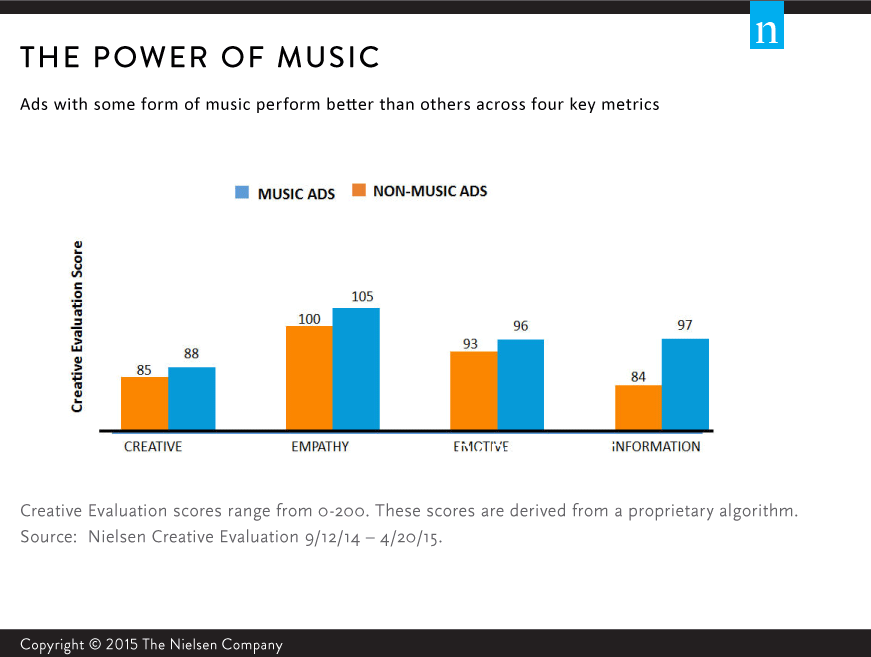
You must be logged in to post a comment.